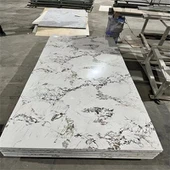
Global export data of wood-plastic composite (WPC) grille wall panels shows a remarkable upward momentum through the first half of 2026, becoming one of the fastest-growing segments within construction decorative material cross-border trade. Industry consulting data records that the global WPC decorative panel market holds a steady compound annual growth rate above 8%, with export orders of WPC grilles surging over 23% year-on-year, driven by dual demands of green policy regulation and aesthetic renovation trends worldwide.
Multiple regional markets present distinct thriving characteristics. North America remains the largest buyer market, accounting for 42% of global WPC grille import volume. Local mature DIY renovation culture pushes home retailers to expand shelf space for click-fit WPC grille kits, as household renovators favor the product's termite-proof, water-resistant and zero-fuss upkeep features over natural solid wood. Western Europe follows as the second core market, where EU circular economy rules and deforestation bans greatly restrict hardwood imports.
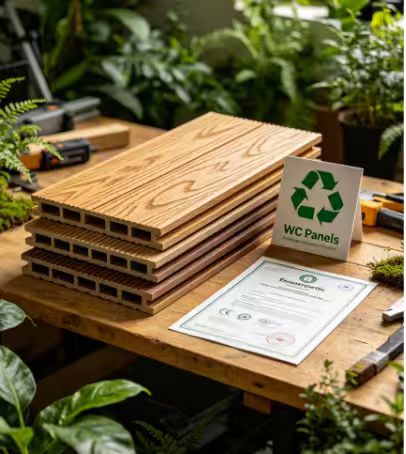
Architects and commercial project contractors prioritize B1 fire-rated WPC grilles for hotel lobbies, office partition walls and retail store facades, since the composite material contains 50%-70% recycled wood fiber and plastic, satisfying LEED green building certification standards.
Southeast Asia stands out as the fastest-growing emerging market, with export growth hitting 533% year-on-year on cross-border B2B platforms. High humidity and frequent tropical rains make traditional timber prone to rot and insect damage, while UV-stabilized WPC grilles perfectly adapt to local villa, resort and landscape wall projects. Middle Eastern markets also release steady demand, with large-scale urban construction projects requiring light-colored anti-UV WPC grilles for exterior facade decoration.
Product iteration acts as another core driving force of export expansion. Current mainstream exported WPC grilles adopt co-extrusion full-wrap technology, solving fading and cracking pain points under extreme temperature. Customizable slat width, wood grain finishes and acoustic enhanced versions meet differentiated needs from residential TV background walls to commercial public spaces. Compared with solid wood, WPC grilles cut long-term maintenance costs by over 60%, with a service life reaching 25 years, forming obvious cost-performance advantages for overseas buyers.
Nevertheless, the industry still faces export barriers. Strict certification standards including EU EN13501 fire test, US ASTM E84 flame retardant detection and low-VOC environmental reports raise entry thresholds for small suppliers. Fluctuating prices of recycled plastic and wood fiber raw materials also squeeze profit margins. Industry insiders predict that high-performance, fully certified customized WPC grille series will seize the dominant export share in the next three years, while integrated indoor-outdoor matching grille systems will become the mainstream competitive product form in global cross-border trade.